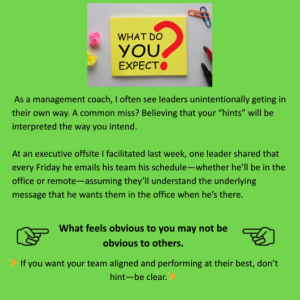
Your team member just spent two weeks building the wrong thing.
Not because they’re incompetent. Because you told them to “take initiative” without defining what that meant. You said the project needed to be “more strategic” without explaining what strategic looks like. You asked for “better quality” without specifying the standard.
They guessed. They got it wrong. And now you’re both frustrated.
Here’s the problem: you think you’re communicating clearly. You’re not.
Vague Direction Creates Expensive Mistakes
Last month, someone on your team missed a deadline.
When you asked why, they said they didn’t realize it was urgent.
You thought “end of quarter” was obviously urgent. To them, it sounded like a target, not a hard stop.
That miscommunication cost you. The client got their deliverable late. Your team scrambled to recover. And the person who missed the deadline still doesn’t understand what went wrong.
When you assume people will interpret your words the way you intended them, you set everyone up to fail.
“Be More Proactive” Tells People Nothing
You’ve given this feedback before. Maybe you’ve given it multiple times to the same person.
- “I need you to be more proactive.”
- “Can you take more ownership?”
- “I’d like to see more leadership from you.”
What does any of that mean?
To you, it might mean anticipating problems before they escalate. To them, it might mean speaking up in meetings more often. Or taking on additional projects. Or making decisions without checking in.
Without specifics, they’re performing for an invisible standard. And you’re frustrated they’re not meeting expectations you never actually defined.
People Fill Silence with Worst-Case Scenarios
You pulled someone aside after a meeting and said, “We need to talk about your presentation later.”
You meant it neutrally. You wanted to give some constructive feedback on their slides.
They spent the rest of the day convinced they’re getting fired.
When you’re vague, people assume the worst. “We need to talk” becomes a threat. “I have concerns” sounds like a performance warning. “Let’s revisit this” feels like rejection.
The gap between what you say and what people hear gets filled with anxiety. Clear communication eliminates that gap.
Soft Language Undermines Your Message
You’re trying to be considerate. You don’t want to come across as demanding or harsh.
So you say:
- “It would be great if you could…” instead of “I need you to…”
- “Have you thought about…” instead of “Change this to…”
- “Maybe we should consider…” instead of “Here’s what we’re doing…”
Your intent is good. The impact isn’t.
Soft language makes directives sound optional. People don’t realize you’re giving an instruction. They think you’re making a suggestion they can decline.
If something needs to happen, say that. You can be direct without being cruel. But you can’t be effective while being vague.
Clear Expectations Prevent Most Problems
Think about the last time someone disappointed you at work. Did they actually understand what you needed? Did they know the timeline? Did they have the full context? Or did you assume they’d figure it out?
Most performance problems aren’t ability problems. They’re clarity problems.
When you’re explicit about what success looks like, people can deliver it. When you’re not, they’re guessing. And guessing is expensive.
What Clear Communication Actually Requires
Saying what you mean requires effort. Think through what you actually need before asking for it. Define standards instead of assuming they’re obvious. Be specific enough that someone could act on your words without follow-up questions.
Your Directness Builds Trust
You’re worried that being too direct will make you seem harsh or unapproachable. The opposite happens.
People trust leaders who tell them the truth. What damages relationships isn’t directness – it’s avoiding hard conversations until problems explode, then acting surprised when nothing changes.
When you say what you mean, people know where they stand. That clarity builds stronger relationships than diplomatic softening ever could.
Stop Assuming People Know What You Mean
You know the conversations where you’re being too vague. The feedback you’re softening until it loses meaning. The expectations you’re assuming are obvious when they’re not.
Clear doesn’t mean harsh. It means honesty. Specific. Direct enough to actually act on.
Want to go deeper on this? This video is worth a watch: https://youtu.be/_2yG4pMazZk
If you’re ready to strengthen your leadership communication, schedule a call with me.
#LeadershipCommunication #ClearExpectations #ExecutiveCoaching #Leadership Development #EffectiveFeedback #TeamManagement